Design a Professional Life You Don’t Need to Escape.
Career Navigation & Writing Coaching
for Early and Mid-Career Humanities Academics
The Points North Framework
You spent years preparing for the tenure track—only to struggle to find a position in a place you actually want to live, or to realize that your "dream job" on paper is a cycle of constant anxiety, exhaustion, and depletion.
But it doesn't have to feel like this. To design a life you don't need to escape, you have to stop over-functioning and establish a new baseline.
I’m Dr. Emily Macgillivray, and I help early- and mid-career scholars find your unique Points North—ensuring your career finally aligns with the reality of your life. Through strategic kindness and capacity-based planning, we build sustainable writing and career strategies that reclaim your agency, whether you are:
Staying the course within academia and needing structural boundaries.
Finding the exit and pivoting to a new landscape.
Unsure what the best path is and needing a map to figure it out.
The Over-Function Audit: Does this sound familiar?
The Perfectionism Trap: You spend 20 hours a week prepping courses you’ve taught for years—not because the material is new, but because of an unwritten pressure to prove you are "enough" to colleagues who aren't even in the room.
The Administrative Erosion: Your writing days are swallowed by student "fires" that feel urgent but leave you depleted. You’re trading your deep intellectual inquiry for the shallow energy of "quick" replies.
The Unpaid Labor of Care: You’ve become the unofficial crisis mentor for your most engaged students. You are pouring from a dry well, leaving your own research parched even when you’ve "prioritized" it on your calendar.


The Service Thicket: You feel unable to say "no" because your campus is under-resourced. You’re hacking through a thicket of committee work that suffocates the very research your tenure—and your sanity—depend on.
The Grading Imbalance: You spend more time crafting feedback and grading than your students spend completing the assignments. The math of your labor isn’t mathing.
The Summer Mirage: You promise yourself you’ll write in June while the manuscript sits untouched in February. But by the time the snow melts, the book feels like a weight you’re dragging rather than a project you love.
This isn’t a reflection of your time-management or your worth.
In fact, it isn’t a "you" problem at all.
It is the predictable result of navigating a landscape that wasn't designed to honor your actual capacity. You aren't failing; you are over-functioning in a system that relies on your exhaustion to stay afloat.
I’m Dr. Emily Macgillivray, and I know what that depletion feels like because I lived it. As a Great Lakes historian and a former tenured professor, I realized that the "dream job" shouldn't require constant stress and anxiety. I used my expertise in understanding complex systems—from historical landscapes to modern land use regulations—to build a different kind of map.
I teach my clients how to practice strategic kindness and reclaim their professional agency. We don’t just "manage time"; we architect a career that fits the reality of your life.
I found my path. Let's map yours.

I Can Help You Implement Strategies To Find Your Points North
Whether you are staying, leaving, or exploring possiblities, we use these tools to bring joy back to your career.
Academic Coaching
Finding the Sustainable Path in an Environment of Scarcity
For the scholar who is tired of being the "hero" of an under-resourced department. You’ve been taught that your value is tied to your exhaustion, and that any move toward rest is a move toward failure. I help you break that contract. We work together to implement an operational baseline that honors your human limits, transforming self-kindness from a "soft" concept into your most powerful professional strategy.
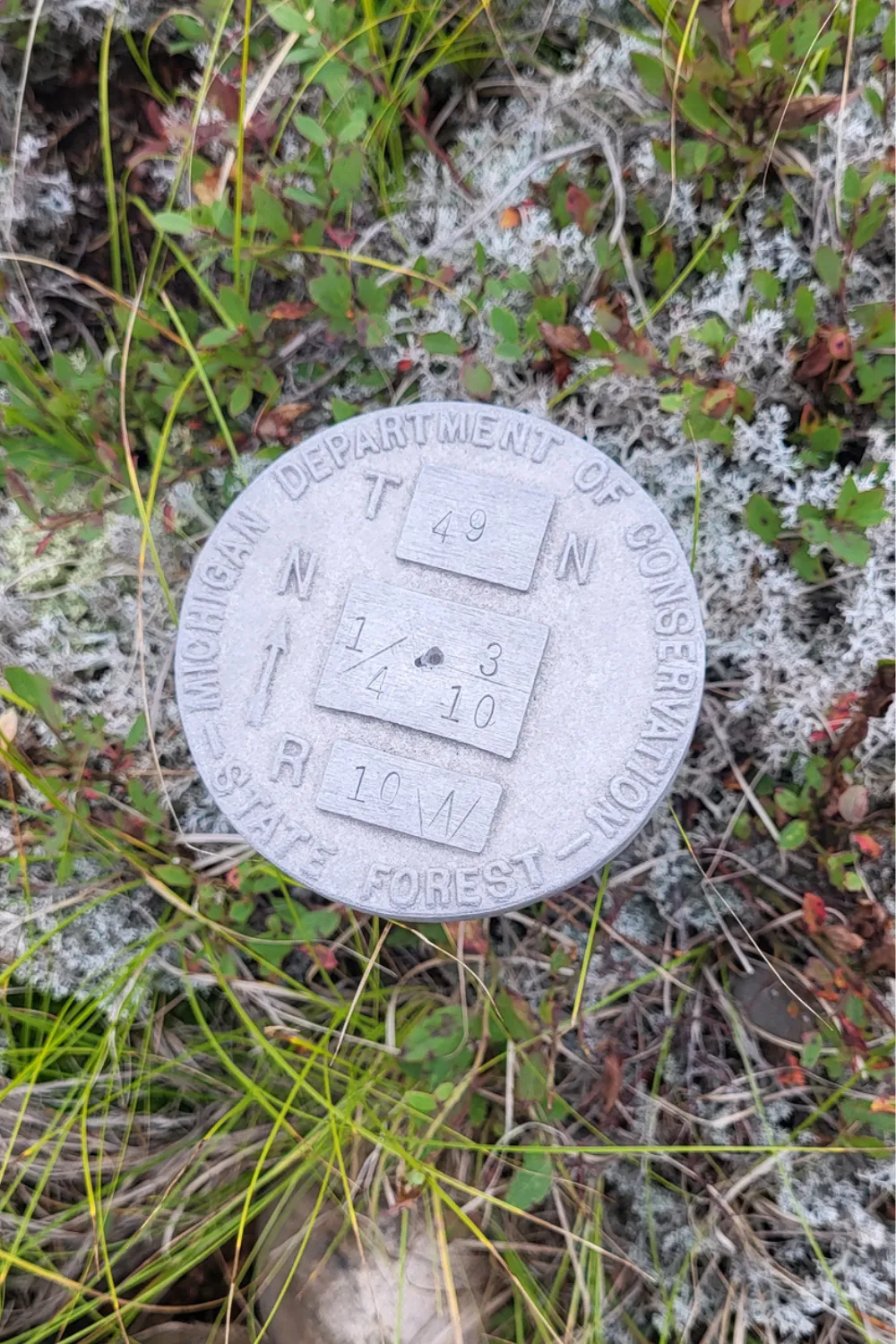
The Protocol of Actual Capacity: Like a survey marker in a shifting landscape, we start by establishing your "Fixed Point of Truth"—your physical and mental capacity today, not your idealized capacity from five years ago. We build a daily practice of checking in with your "somatic data" so you can stop over-functioning before the burnout takes hold.
The Strategic Kindness Filter: We audit your workload through a new lens: Would I ask this of a colleague I truly respected? We implement the "80% Threshold" for course prep and administrative tasks, giving you the explicit permission to be "good enough" where it matters so you can be brilliant where it counts.
Decoupling Worth from the CV: We develop the internal boundaries needed to resist "time-theft." This isn't just about saying "no"; it’s about the deeper work of deprogramming the "policing" voice that tells you that you aren't doing enough. We create a map that protects your research, your rest, and your right to a life that doesn't feel like a crisis.

Career Coaching
Understanding the Possiblities & Finding the Integrated Path
For the scholar at a crossroads where the path forward feels like an "all or nothing" choice. We know that the pressure to stay or leave isn't just about a paycheck—it’s about the foundational transition of who you are and how you work. We move away from the binary trap of "stay or go" and toward Landscape Alignment—an integrated strategy that ensures your career fits the actual topography of your life, not the other way around.
The Identity Evolution Protocol: We begin by untangling your professional value from academic titles. Using
Strategic Kindness, we clear the noise of the "shoulds" so you can navigate this transition with clarity. This isn't about a frantic exit; it’s about reclaiming the agency to define your life on your own terms, whether you remain in the academy or expand beyond it.
Multi-Layered Mapping: Career moves are rarely a single, sharp turn. We look at the "In-Between": building a safety net, experimenting with external consulting, or re-negotiating your current role. We treat your career as a living landscape with room for expansion, ensuring that your next move fits the actual topography of your life—including where you want to live and the rhythm of the days you want to have.
The Aligned Navigator: Whether you are building a bridge to a new field or fortifying your boundaries where you are, we move with Intentionality. We translate your deep expertise into a language of broader opportunity, allowing you to gather data and experiment with "both at once" at a pace that respects your humanity. We ensure you find your Points North with your agency—and your peace of mind—fully intact.
Writing Coaching & Developmental Editing
Grounded in Kindness & Stragegy
For the scholar whose research has been suffocated by the "Teaching & Service Thicket" or anxieties grounded in perfectionism and peer critiques that are hurtful, not helpful. You love your ideas, but the manuscript has become a source of guilt rather than a source of joy. We move away from the "binge-and-burnout" writing cycle and toward a Writing Protocol that matches your goals, honors your actual capacity, and gets the work out the door.
The "Done over Perfect" Protocol: Perfectionism is often a survival mechanism for a high-achiever. We use Strategic Kindness to lower the emotional stakes of the drafting process, implementing a "minimum viable word count" that keeps momentum forward without triggering the "not enough" spiral.
Inquiry-Led Calibration: We move your research from a guilt-inducing "to-do" back to your primary intellectual inquiry. Once we unpack the "Why" behind your project, we develop a customized practice to make that research a sustainable reality. Whether you need a somatic ritual to lower perfectionist stakes or a physical boundary to protect a "slow-drip" momentum, we build a rhythm that respects your burnout and your publication expectation—ensuring you stay connected to your work without the cycle of depletion.
The Navigator's Edit: Whether you need a structural overhaul of a book manuscript or a roadmap to finish your first article, I provide developmental editing that respects your voice and your timeline. We treat the editing process as a collaborative strategy to ensure your ideas reach your audience with clarity, purpose, and integrity.
Stop Over-functioning. Start Navigating.
You’ve spent years becoming an expert in your field, yet you find yourself paralyzed by the weight of the "hidden curriculum" and the constant pressure to do more with less.
You want a professional life that feels meaningful, but right now, you’re just trying to survive the next committee meeting.
You don’t have to trade your well-being for your worth.
I know the exhaustion of the academic grind because I’ve lived it—and I know that a different path exists because I’ve mapped it.
Let’s discuss how to reclaim your agency and align your career with the reality of your life.
Meet Your Navigator: Designing Careers That Honor Your Capacity

I’m Emily Macgillivray, PhD, and I believe in the Integrated Scholar: a professional who refuses to let their career define the boundaries of their life.
I spent seven years as a tenured Assistant Professor and faculty curator, at a tuition-dependent, small liberal arts college, navigating the same "institutional fog" and depletion you may be facing now. I published multiple peer-reviewed journal articles, received a prestigious fellowship at the Newberry Library, taught a 3-3 load of traditional Humanities seminars and field classes, and got tenure.
Then, I lost my position through when the college declared exigency. I chose to remain in the Northwoods--an area I love--to build a life as a land-use professional and historian. Through this process, I learned that while a PhD is a powerful tool, it shouldn't be a cage.
Your career should serve the life you want to live—not the other way around. My "Points North" advantage is applying the landscape literacy I use in the field to see the hidden layers and structural boundaries that govern professional environments. I use this skill to help you architect a path that honors your actual capacity and your need for a meaningful existence outside the academy.
Whether you are seeking a sustainable way to stay or the clarity to move on, I help you
see the topography of your professional life and designed a customzied path forward grounded in both kindeness and strategy.
PhD, University of Michigan
Former Associate Professor & Curator
Land Use Professional with State Trades Credentials
Founder, The Outdoors Historian
Points North Strategy
Emily Macgillivray, PhD
© 2026 Emily Macgillivray. All rights reserved.